
Voice Search & Conversational UX for Websites
In today’s digital-first world, voice search and conversational UX are not merely fringe trends — they’re becoming essential for websites that want to stay relevant, accessible and visible. If you’re a developer, designer or website owner, understanding how to implement and optimise for voice search conversational UX can set you apart from the competition.
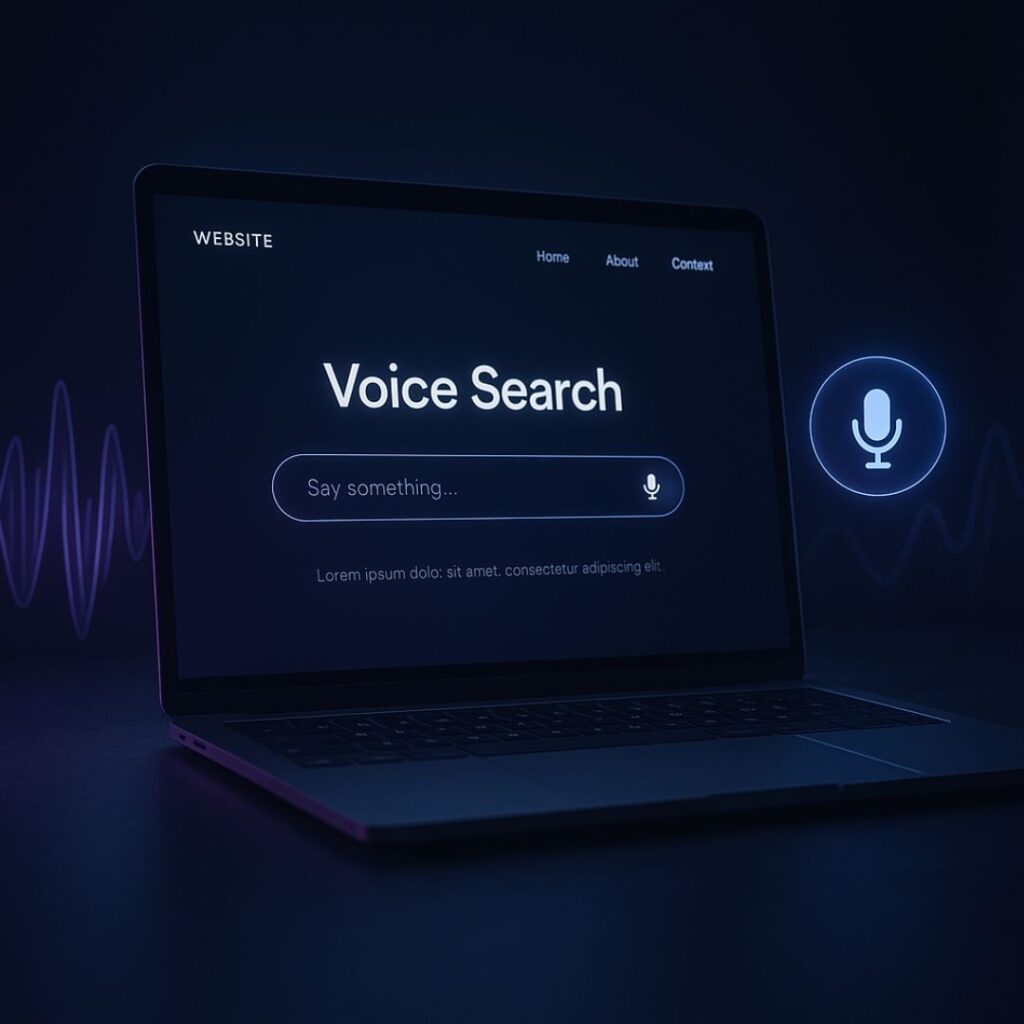
Why Voice Search & Conversational UX Matter
The shift in how users interact
Users increasingly replace typing with speaking. One article notes that as voice assistants become ubiquitous, the way we search online is evolving.
Queries via voice tend to be longer, phrased in more natural language, and often in question form (e.g., “Where’s the best coffee shop near me?”) rather than keywords like “best coffee shop”.
Websites with a good conversational UX design can provide more intuitive, human-like interactions, which improve engagement and satisfaction.
Users increasingly replace typing with speaking. One article notes that as voice assistants become ubiquitous, the way we search online is evolving.
Queries via voice tend to be longer, phrased in more natural language, and often in question form (e.g., “Where’s the best coffee shop near me?”) rather than keywords like “best coffee shop”.
Websites with a good conversational UX design can provide more intuitive, human-like interactions, which improve engagement and satisfaction.
Why this matters for SEO & UX
When users speak queries, they expect quick, relevant answers. If your website can’t deliver that, you risk losing the user.
For SEO, voice search optimisation helps you tap into a new and growing segment of traffic. Especially for mobile and local queries.
Conversational UX isn’t just about voice commands — it’s about designing interfaces (voice + chat + UI) that behave more naturally, reducing friction and making tasks smoother
The Core Components of Voice Search Conversational UX
When users speak queries, they expect quick, relevant answers. If your website can’t deliver that, you risk losing the user.
For SEO, voice search optimisation helps you tap into a new and growing segment of traffic. Especially for mobile and local queries.
Conversational UX isn’t just about voice commands — it’s about designing interfaces (voice + chat + UI) that behave more naturally, reducing friction and making tasks smoother
To get your website ready for voice search & conversational UX, focus on three key areas:
1. Conversational Content & Keywords
-
Use long-tail keywords phrased as full questions, not just single keywords. E.g., “How do I optimise my website for voice search?” rather than “voice search optimisation”.
-
Write in a conversational tone: imagine you’re answering someone who just asked you the question out loud. This helps match how users speak their queries.
-
Create FAQ-style sections that anticipate the questions your users will ask. These are especially effective for voice search.
2. Technical & UX Readiness for Voice
-
Ensure fast page loading, mobile-friendly design, and clear structure. Many voice queries come from mobile or smart-devices.
-
Use structured data (schema markup) so that search engines (and voice assistants) can easily interpret your content and pull useful answers.
-
Consider the conversational interface: if you implement voice or chat UI, guide users naturally, handle mis-recognition gracefully, and offer fallback options (text input).
3. Local & Contextual Optimisation
-
Many voice queries are “near me” or want local information: e.g., “Find a vegetarian restaurant near Karachi.” Optimise for local SEO to capture this.
-
Understand user intent: Are they asking for information, navigation, or transaction? Tailor your content accordingly.
-
Make your UX inclusive: voice search is especially useful for accessibility (users who prefer speaking over typing). Designing with accessibility in mind improves both UX and SEO.
How to Optimise Your Website for Voice Search Conversational UX
Here’s a step-by-step actionable roadmap you can implement:
- Audit your current content:
-
Identify pages that answer questions.
-
Find opportunities to convert content into conversational Q&A format (e.g., “What is…?”, “How do I…?”, “Where can I…?”).
-
- Keyword research for voice:
-
Use tools like AnswerThePublic to find common question-based queries.
-
Focus on longer phrases, natural language, and multiple ways people might ask the same thing.
-
- Rewrite or create content:
-
Use a conversational tone.
-
Provide direct, concise answers near the top of the content (ideal for featured snippets).
-
Use headings with question-phrases, and answer clearly.
-
- Implement UX & technical improvements:
-
Ensure fast load times, mobile responsiveness, clear navigation.
-
Add schema markup to key pages (FAQ schema, LocalBusiness schema).
-
If using voice or chat UI: test voice recognition, fallback to text, provide confirmations/feedback for users.
-
- Local optimisation (if applicable):
-
Include location-specific phrases (“near me”, “in Karachi”, etc).
-
Ensure your Google Business Profile (or local listing) is up-to-date.
-
- Monitor results & iterate:
-
-
Use Google Search Console to track queries, especially those shown as “questions”.
-
Look at metrics: dwell time, bounce rate, conversion from voice-friendly content.
-
Refine based on what voice users are asking and how your site’s answering.
-
Mistakes to Avoid
-
Using only short, generic keywords: e.g., “best e-commerce platform” instead of “Which is the best e-commerce platform for small business 2025?”
-
Treating voice search the same as traditional search: voice search requires different phrasing, structure and tone.
-
Ignoring mobile and voice UI constraints: slow pages, complicated navigation hurt voice-driven UX.
-
Forgetting local & contextual factors: ignoring “near me”, assuming typing behaviour.
-
Not structuring content for quick answers: voice assistants favour content that directly answers a question.
Future Trends & What to Watch
-
The shift to voice is accelerating: content sources forecast nearly half of all online searches will be voice-based.
-
Conversational UI (voice + chat) will become more standard in web applications and websites.
-
Improved Natural Language Processing (NLP) will make assistants better at context, follow-up questions and handling multi-step queries — so your site should anticipate deeper conversational flows.
-
As voice and local search grow, expect more “zero-click” results (answers provided directly by assistants) — making it even more important to be structured and authoritative.
FAQ's
Q: What is the difference between voice search and conversational UX?
Voice search refers to the act of using spoken words (via smart-devices, assistants) to query content. Conversational UX refers to designing the overall experience (voice, chat, interface) that allows a natural, human-like conversation with a website or app.
Q: ill it take to see results from voice-search optimisation?
It depends on your site’s current state, competition and how well you implement. Some results (like improved engagement) can be seen quickly. But ranking for voice queries — especially featured snippets — can take several months of consistent effort.
Q: Do I need to build a voice assistant for my website to benefit?
No. Many benefits come from optimising content and UX for the way people speak and search. Building a full voice-assistant interface is optional and depends on your use-case.
Final Thoughts and Takeaways
If you still view voice search and conversational UX as optional extras for your website — it’s time to reconsider. The truth is that voice search conversational UX is changing how users find, interact with, and navigate websites. By adapting your content, UX design, technical foundation and SEO strategy now, you prepare your site for the future — and gain an edge today.
Start by making your website speak human. Use conversational questions, design your UX to listen and respond, optimise for voice and local search — and you’ll not only serve your users better, you’ll boost your ranking potential too.

 Why Local SEO Really Matters for NFT Bloggers in the U.S.
 “Top NFT events in NYC”
 Step-by-Step: Optimize Your NFT Blog Content on Wix Studio
 1. Sprinkle in Local Keywords (Naturally!)
 Pro tip:
 This helps Google connect your blog with real-world locations.
 “What’s the best NFT event in Chicago this weekend?”
 Use E-A-T to Build Real Authority in the NFT Space
 Expertise
 Add author bios like:
 Authority = backlinks + credibility = rankings.
 Especially if you’re promoting local services, meetups, or physical events.
 Technical SEO Tips (Wix Studio Ready)
 Improve Page Speed & Core Web Vitals
 Go Mobile-First (No Excuses!)
 Use Clean, SEO-Friendly URLs
 Add Engaging Visual Content
 Example: